

Date:
23/05/2025

 CONSUMER DECISIONS
Imagine spending hours crafting the perfect email campaign—great design, compelling copy, and irresistible offers—only to have dozens of your messages bounce back undelivered. Frustrating, right?
That’s why it’s important to understand what a hard bounce in email marketing is—it refers to emails that fail to reach recipients due to permanent delivery issues. These failed deliveries can hurt your email marketing performance and damage your sender reputation if not addressed properly.
Reaching your audience personally is one of the key strengths of email marketing. However, not every message will successfully land in your recipient’s inbox. One common issue marketers face is the email bounce. Understanding the difference between a hard bounce and a soft bounce is crucial for maintaining a healthy email list and achieving better results.
This blog will explain what a hard bounce is, how it differs from a soft bounce, the main causes of hard bounces, their impact on your deliverability and sender score, and practical tips to reduce your bounce rate. We’ll also share examples relevant to Ghanaian marketers and small business owners.
A hard bounce happens when an email you send is permanently rejected by the recipient’s mail server and cannot be delivered. This means the email address is invalid or unreachable for a permanent reason, and future delivery attempts to that address will fail.
Because hard bounces indicate permanent delivery failure, email marketing platforms usually remove these addresses automatically from your mailing list to protect your sender’s reputation.
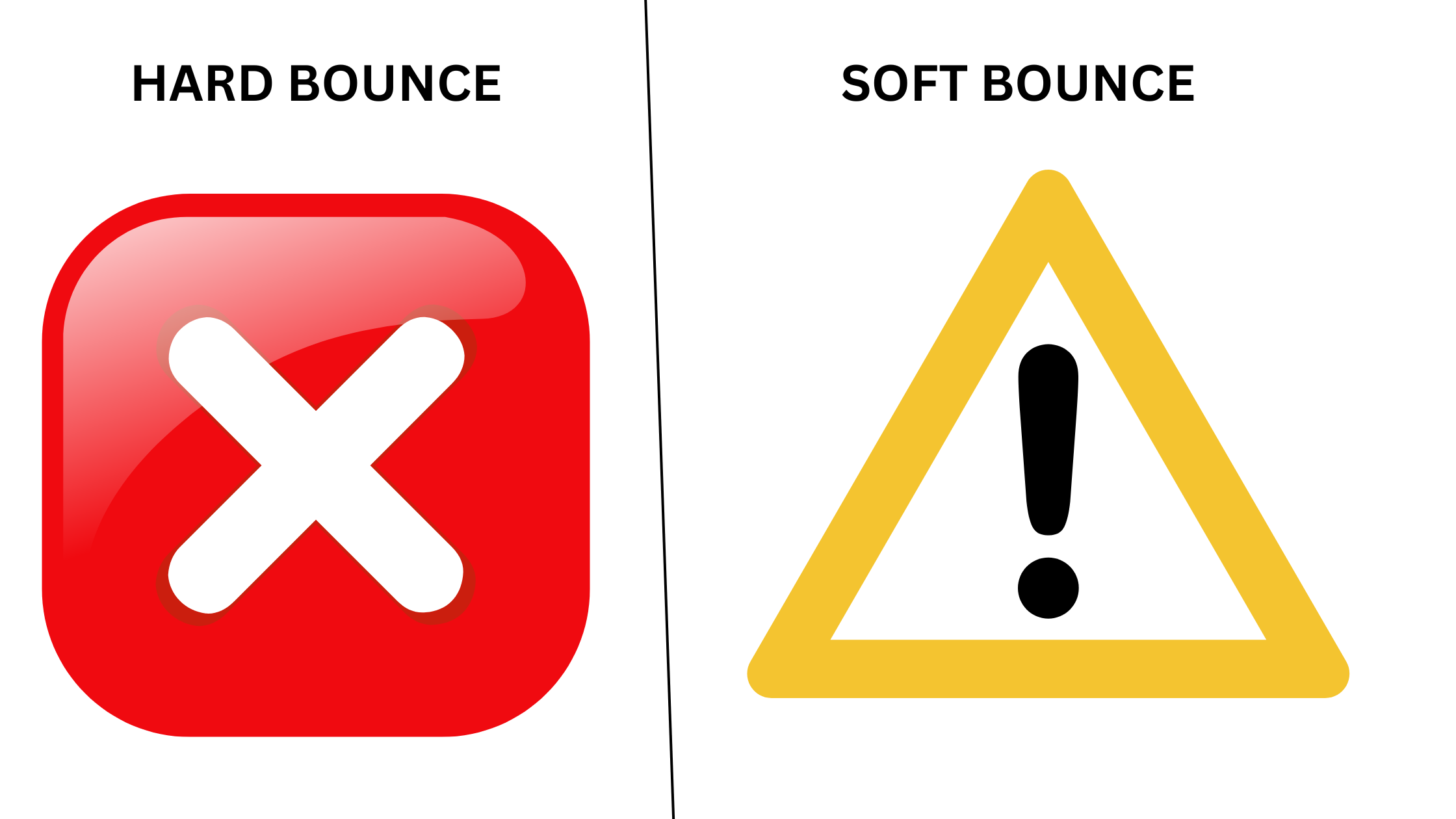
A hard bounce is a permanent failure to deliver an email, while a soft bounce is a temporary issue that prevents delivery.
For example, a hard bounce could occur if you send an email to “morris.owusu@gnmail.com,” but the domain “gnmail.com” does not exist. The email will be rejected permanently.
On the other hand, a soft bounce might happen if you send an email to “annie.smith@gmail.com,” but her inbox is full. The email bounces back temporarily but may be delivered later once space is available.
Understanding this difference helps you decide which email addresses to remove from your list and which to keep trying. Removing hard bounce addresses improves your email marketing performance and helps maintain a clean list.
Several factors can cause hard bounces in your email marketing campaigns:
For instance, if a Ghanaian retailer collects email addresses at an event and some attendees write their addresses incorrectly, those emails will likely hard bounce when the next campaign is sent.
High hard bounce rates can seriously harm your email marketing efforts:
For Ghanaian businesses and marketers, maintaining a clean email list is critical to ensuring your messages reach customers and prospects effectively. If your sender reputation drops, even your best marketing emails could end up in the spam folder, costing you potential sales and engagement.
Reducing your hard bounce rate helps improve your email marketing success. Here are actionable tips:
Require subscribers to confirm their email address by clicking a verification link after signing up, the process is known as double opt-in. This step ensures the address is valid and reduces fake or mistyped emails.
Immediately after confirmation, send a welcome email. Welcome emails tend to perform much better than regular campaigns-generating up to 4 times more opens and 5 times more clicks. They help you:
For example, a Ghanaian online bookstore can send a welcome email with a discount code or a curated list of popular books. If the welcome email bounces, the email address can be removed immediately, preventing future hard bounces and protecting your sender reputation.
Remove inactive or bounced email addresses periodically. Many email marketing tools offer automatic list cleaning features. Set a schedule-such as monthly or quarterly review and update your list, especially after large campaigns or events.
Use email validation tools to check the format and existence of email addresses when users subscribe. This can be as simple as requiring users to enter their email address twice or using online validation services.
Bought lists often contain invalid or outdated addresses, leading to high bounce rates and spam complaints. Focus on growing your list organically through your website, social media, and events.
Pay attention to bounce notifications and remove hard bounce addresses promptly to protect your sender reputation. Most email marketing platforms provide detailed bounce reports after each campaign.
Inform your subscribers about the importance of providing accurate email addresses and encourage them to update their contact information if it changes. This is especially useful for businesses that interact with customers in person, such as at retail stores or events.
Regularly segment your list to target active subscribers and remove those who have not engaged over a certain period. This helps maintain list hygiene and reduces bounce rates. For example, a Ghanaian restaurant can send re-engagement emails to customers who haven’t opened their emails in six months and remove those who remain inactive.
For more technical details on bounce types and prevention, check out this guide from Avada.
Imagine a small Ghanaian e-commerce business sending a promotional email to 1,000 customers. If 50 emails hard bounce due to invalid addresses or closed accounts, that’s a 5% hard bounce rate-which is quite high.
This can lead to:
By implementing double opt-in on their website and cleaning their list monthly, the business can reduce hard bounces, improve deliverability, and increase sales from email campaigns. Over time, this proactive approach can also boost customer trust, as subscribers know their data is being managed responsibly.

A hard bounce is a permanent email delivery failure that signals invalid or unreachable email addresses. Distinguishing hard bounces from soft bounces helps you manage your email lists better and maintain a strong sender reputation. For beginner and intermediate digital marketers, especially in Ghana, reducing hard bounce rates is essential to ensure your email marketing campaigns reach the right audience and deliver measurable results.
By using double opt-in, sending automated welcome emails, validating emails, regularly cleaning your list, monitoring bounce reports, educating subscribers, and segmenting your list, you can keep your email bounce rate low, protect your sender reputation, and maximize the effectiveness of your email marketing.
Treat your email list like gold—because when managed well, it can open doors to better engagement, stronger relationships, and real business growth.
Reducing hard bounces is a key part of maintaining your email marketing performance. Once you’ve cleaned your list, you can focus on creating high-performing campaigns that deliver results. Not sure where to start? Check out our blog on how to promote business through email for practical tips tailored to growing businesses in Ghana